



It’s the backbone of your financial record-keeping, and using numbers to categorize everything makes it way easier to manage. It includes a list of all the accounts used to capture the money spent in generating revenues for the business. The expenses can be tied back to specific products https://host314.com/2021/12/10/cherry-bekaert-bolsters-outsourced-accounting/ or revenue-generating activities of the business. Some of the components of the owner’s equity accounts include common stock, preferred stock, and retained earnings. The numbering system of the owner’s equity account for a large company can continue from the liability accounts and start from 3000 to 3999.
- A few examples of general ledger liability accounts include Accounts Payable, Short-term Loans Payable, Accrued Liabilities, Deferred Revenues, Bonds Payable, and many more.
- The numbering system of the owner’s equity account for a large company can continue from the liability accounts and start from 3000 to 3999.
- The most liquid of all assets, cash, usually appears on the first line of the balance sheet.
- The clearinghouse is the designated financial intermediary that validates and finalizes transactions between a buyer and a seller.
- When a company is first formed, shareholders will typically put in cash.
Financial Ratios: Definition, Types, and Examples
The division code is then added to the current five digit code to create a 7 digit chart of accounts numbering system. Insurance Expense, Wages Expense, Advertising Expense, Interest Expense are expenses matched with the period of time in the heading of the income statement. Under the accrual basis of accounting, the matching is NOT based on the date that the expenses are paid. Operating expenses are the costs of a company’s main operations that have been used up during the period indicated on the income statement.
Statement of Account excel template

The two digit department codes allocated are the Production Department 01, and the Marketing Department 02 with the default department being the General Department 00. As a business develops and grows it establishes departments such as, for example, production, design, sales & marketing, and accounting departments. In order to record accounting information by department a further two digits are used to form a department code. The department code is then added to the current three digit account code to create a 5 digit chart of accounts numbering system.
- For example, if a company receives $10,000 today to perform services in the next accounting period, the $10,000 is unearned in this accounting period.
- When allocating account codes (chart of accounts numbers) don’t forget to leave space for additional accounts and codes to be inserted in a group at a later stage.
- If you acquire another company, a key task is shifting the acquiree’s chart of accounts into the parent company’s chart of accounts, so that you can present consolidated financial results.
- Their cost will be depreciated on the financial statements over their useful lives.
- It includes a column for recording expense categories, and the formula used for the Balance makes it easy to add and delete rows.
- An income statement basically totals the income, totals the expenses, and subtracts the expenses from the income to arrive at a profit or loss figure.
Chart of Accounts Numbering System

Small businesses starting up can take full advantage of Excel until they are in a position to afford bookkeeping software. In case no, check out ZarMoney – low cost, yet super powerful cloud accounting solution. You can and should always add new accounts later or delete those accounts that you will never use to keep yourself organized. A well designed Chart of Accounts provides a logical structure that facilitates the addition of new accounts and deletion of old ones. Cash and cash equivalents is a useful number that can help investors understand whether a company is liquid enough to cope with larger or unexpected short-term cash needs.
Income statement accounts
Looking at the COA will help you determine whether all aspects of your business are as effective as they could be. If you keep your COA format the same over time, it will be easier to compare results through several years’ worth of information. This QuickBooks acts as a company financial health report that is useful not only to business owner, but also investors and shareholders. The general ledger provides a comprehensive view of your financial activities. However, a profit and loss (P&L) statement overviews revenues and expenses. For example, bank fees and rent expenses might be account names you use.

If you start with a small number of accounts and then exponentially expand the number of accounts over time, it becomes very difficult to obtain reliable comparable financial information from year after year. If a new account is being created to track transactions separately that once appeared in another account, you must move the transactions already in the books to the new account. A Standard chart of accounts takes the above Main Categories and Sub Categories and breaks them down into a numerical system. Therefore, looking into a company’s cash position should be done alongside the examination of its recent past and expected shorter-term future, as well as industry norms. CCE is, after all, a measure of a short-term position, since the assets all have life spans of 90 or fewer days. Building a very strong cash position can also create pressure from shareholders to pay dividends or issue stock buybacks, which are ways of returning capital to shareholders.
Equity represents the value that is left in the business after deducting all chart of accounts numbering the liabilities from the assets. Owner’s equity measures how valuable the company is to the shareholders of the company. An income statement basically totals the income, totals the expenses, and subtracts the expenses from the income to arrive at a profit or loss figure. With ZarMoney accounting software, you have flexibility when creating your custom chart of accounts.
The term “reliability” refers to the ability of a test or method to provide stable results (e.g., when different patients are compared or different investigators rate the same patient). The term “predictive validity” refers to the ability of a test or method to predict a certain outcome (e.g., relapse risk) accurately. By understanding the abstinence violation effect and implementing strategies to manage it in eating disorder recovery, you can cultivate resilience, self-compassion, and sustainable progress toward healing and well-being. Those who drink the most http://solanavibe.com/2022/09/16/bookkeeper360-review-pricing-features-and-top/ tend to have higher expectations regarding the positive effects of alcohol9. In high-risk situations, the person expects alcohol to help him or her cope with negative emotions or conflict (i.e. when drinking serves as “self-medication”).

The Cognitive-Behavioral Framework
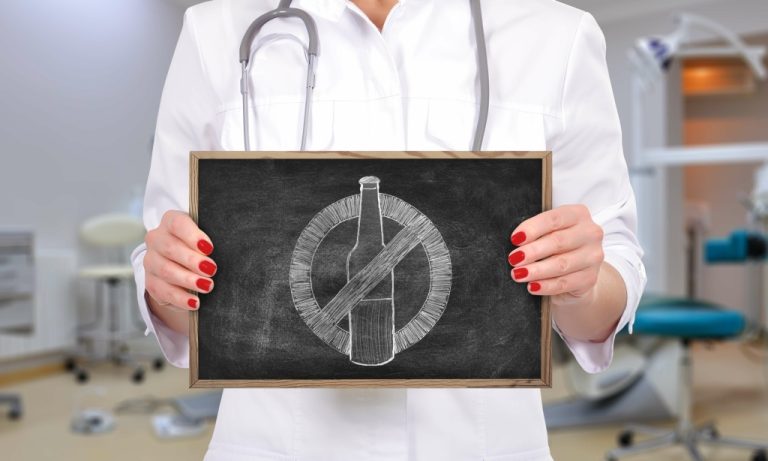
AVE is a critical concept for anyone navigating sobriety, and recognizing it can prevent a temporary mistake from becoming a long-term setback. Effect,” which results from a state of cognitive dissonance regarding the nonabstinent behavior and the individual’s image of being abstinent. This dissonance can be reduced by either changing the behavior or changing the image, and characteristically in this population is resolved by the latter. Internal and stable attributes for the slip also lead to further lapse behavior. This model has received a good deal of empirical support and has the merit of dismantling the process of relapse and exploring subjective and cognitive variables in a manner that has important treatment implications.
Comparing Responses to a Recovery Lapse
A brief description of Weiner’s attributional theory is provided and this is used to reformulate the AVE. We can use our experiences to help others by telling them how relapse and abstinence violation effect caused us torment. If we can keep others from making the same mistakes, our experiences will serve a wonderful purpose. The memories of our slips may always sting a bit, but at least we can sleep easy at night knowing that we used them to do some good.
- The memories of our slips may always sting a bit, but at least we can sleep easy at night knowing that we used them to do some good.
- Cognitive processes may include self-blame, rumination, and heightened self-awareness.
- It’s a voice of self-compassion and a desire to learn from the experience.
- When people don’t understand relapse prevention, they think it involves saying no just before they are about to use.
They often assume that non-addicts don’t have the same problems or experience the same negative alcoholism emotions. Therefore, they feel it is defensible or necessary to escape their negative feelings. The cognitive challenge is to indicate that negative feelings are not signs of failure, but a normal part of life and opportunities for growth. Helping clients feel comfortable with being uncomfortable can reduce their need to escape into addiction.
Individual differences
This is a problem faced by many addicts and alcoholics, and it actually applies to more than just AVE. But when we get a flat tire, we find ourselves practically on the verge of calling a suicide prevention hotline. Obviously this rhetoric is extreme, but that’s the point—we tend to think in extremes. They think it is almost embarrassing to talk about the basics of recovery. They are embarrassed to mention that they still have occasional cravings or that they are no longer sure if they had an addiction.
- Another limitation is that our operational definition of relapse was necessarily arbitrary (Miller, 1996), and is more conservative than the 7-days’ smoking criterion used in other studies.
- The practice of self-care during mind-body relaxation translates into self-care in the rest of life.
- We feel an urge or encounter a trigger, and suddenly we decide that our attempts at recovery have failed.
- It is secular and focuses on behavior and thought change over spiritual surrender.
- John’s key responsibilities include maintaining the day-to-day operations from both a clinical and housing perspective.
- Another factor that may occur is the Problem of Immediate Gratification where the client settles for shorter positive outcomes and does not consider larger long term adverse consequences when they lapse.
7 Help for Drug & Alcohol Use
In other words, the Abstinence Violation Effect translates into a high-risk situation for relapse (no fall or occasional use). When you’re first learning about the abstinence violation effect, it can feel like a lot to take in. Getting clear, straightforward answers can help you feel more confident and prepared for the road ahead. Cognitive Behavioral Therapy (CBT) offers some of the most powerful tools for taking apart the abstinence violation effect.
Understanding This Common Recovery Hurdle
- Equally bad can be the sense of failure and shame that a formerly “clean” individual can experience following a return to substance use.
- Brie works closely with the leadership team to develop and implement effective HR strategies that support our organization’s goals and values.
- Recovering individuals tend to see setbacks as failures because they are unusually hard on themselves 9.
Identify your triggers and create a relapse prevention plan to help in case there’s a next time. Advocates of nonabstinence approaches often point to indirect evidence, including research examining reasons people with SUD do and do not enter treatment. This literature – most of which has been conducted in the U.S. – suggests a strong link between abstinence goals and treatment entry. The study was especially notable because most other treatment readiness measures have been validated on treatment-seeking samples (see Freyer et al., 2004).
The overarching goal of the present research was to examine the way psychological responses to lapses influenced quitters’ ability to maintain abstinence. EMA captured the timing of lapses, the amount smoked during each lapse episode, and participants’ immediate AVE responses. Recurrent-event survival models were used to evaluate the extent to which AVE responses to each successive lapse influenced the hazard of an additional lapse. The AVE was introduced into the substance abuse literature within the context of the “relapse process” (Marlatt and Gordon 1985, p. 37). Relapse has been variously defined, depending on theoretical orientation, treatment goals, cultural context, and target substance (Miller 1996; White 2007). It is, however, most commonly used to refer to a resumption of substance use behavior after a period of abstinence from substances (Miller 1996).
Key 2: Identify and Challenge “All-or-Nothing” Thinking
Later, when using turns into a negative experience, they often continue to expect it to be positive. It is common to hear addicts talk about chasing the early highs they had. On the other hand, individuals expect that not using drugs or alcohol will lead to the emotional pain or boredom that they tried to escape. Therefore, on the one hand, individuals expect that using will continue to be fun, and, on the other hand, they expect that not using will be uncomfortable.
This approach would be applicable to recovered depressed patients and would serve as a means of preventing relapse. Teasdale and colleagues provide a description of this training which teaches generic psychological, self-control skills and can be used on a continuing basis to maintain skills after initial training. Cognitions—specifically, thoughts and expectations about drinking behavior and sobriety—contribute importantly to the process of relapse.

Future studies that incorporate fine-grained, ecologically valid measures with dynamic longitudinal analysis techniques may reveal much more about the subtle processes that drive the link between lapse and relapse outcomes. For example, our data demonstrate that the lapse progression process is highly variable both between individual participants and across momentary circumstances. This suggests that it would be useful to formally model this variation and thereby identify subgroups of subjects who followed similar recurrent survival trajectories. A corresponding extension abstinence violation effect of this approach would be to identify subgroups of subjects who followed similar AVE response trajectories; e.g., using latent mixture models to identify different trajectories towards relapse versus recovery.
AVE occurs when individuals interpret a slip not as a momentary setback, but as total failure. This all-or-nothing thinking can be particularly damaging in addiction recovery, where flexibility and self-compassion are essential. The concept was developed by researchers Alan Marlatt and Judith Gordon in the 1980s as part of relapse prevention theory.

https://www.ettoday.net/news/20210319/1941936.htm?from=ettoday_app
中華醫事科技大學餐旅系22位學生取得國際餐旅管理專業人員認證,台北福爾摩沙管理顧問有限公司執行長暨社團法人中華款待業專業人員暨國際認證協會理事長余紹君親自蒞校授證。
原文網址: 中華醫大餐旅系22位學生 取得國際餐旅管理專業人員認證 | ETtoday地方新聞 |
恭喜同學們順利畢業,記住畢業不是學習的結束,而是另一個嶄新的開始
離開大學,邁向下一段旅程,將開啟另一段精采生活,途中的徬徨與不安感在所難免,重點用什麼心態面對,請 揮動信心的翅膀,飛像開闊的天空 大家加油

(圖片引用ETtoday地方新聞)